
★★★★★
“We stopped missing new patient calls and filled our diary from day one. The AI books into our calendar and escalates emergencies to the on‑call dentist.”
An AI receptionist is a natural‑language agent that answers calls 24/7, captures details, books appointments and routes urgent callers — delivering receptionist‑grade coverage at a fraction of the cost. In this expert UK guide, learn the core technology, features, pricing, ROI and when to choose AI Receptionist UK over virtual or human reception.
Watch how our AI receptionist answers calls, books appointments, and captures leads for UK businesses.
Try it yourself: Call 01625 926 068
A practical definition, plus the top reasons UK businesses adopt AI call answering.
An AI receptionist is a speech-enabled, natural-language agent that answers your business phone line, understands callers in plain English, follows your scripts and workflows, then completes tasks such as message taking, appointment booking, qualification and live transfer to the right person.
Most UK firms run AI first for immediate response, then escalate to a human via live transfer when the call demands nuance — the best of both worlds.
Twenty-four-hour coverage with an instant answer every time, multiple concurrent callers handled without strain, appointments booked straight into your calendar, leads captured cleanly into your CRM, and confirmations sent automatically by SMS or email. Costs are predictable, integrations are stable, and UK/EU hosting keeps you GDPR-ready out of the box.
Compare options on the pillar: AI Receptionist UK.
An AI receptionist is not a press-1 IVR menu — it’s conversational AI that understands natural speech and handles interruptions. It’s not a replacement for every complex call; sensitive matters should always escalate to a human. And it’s not locked down — you control the scripts, the escalation rules and the routing logic at all times.
See AI Receptionist vs IVR for the full comparison.
Clear up common misconceptions for UK buyers.
Fact: It’s conversational AI that understands natural speech, handles interruptions and completes tasks like booking and lead capture.
Fact: Clear speech with optional keypad fallback works well for seniors. Offer both during adoption, then phase out menus once metrics improve.
Fact: With UK/EU hosting, encryption, access controls and a DPA, AI reception can meet GDPR requirements.
Examples across clinics, trades, salons, agencies and law firms.
Booking, rescheduling, emergency routing; confirmations reduce no‑shows.
Emergency triage with instant live transfer; capture routine quotes after‑hours.
Multi‑site calendars, deposit policies, reminders and lead intake.
Intake and priority routing; human escalation for sensitive matters.
From “hello” to hand-off — the call flow, technology and integrations that make it work.
The AI answers in your brand voice, then uses speech-to-text and intent detection to work out why the caller is ringing — new enquiry, booking, emergency, billing query — and confirms details naturally to avoid errors.
Once intent is known, it gathers the fields you define (name, number, email, reason, urgency, location, preferred times) and validates formats as it goes. Data is encrypted in transit and at rest.
Based on caller intent, the AI books appointments in your connected calendar, creates CRM leads, sends SMS or email confirmations, or live-transfers to the right person. Rules can vary by time of day or caller type, so an out-of-hours emergency is routed differently from a routine enquiry at 10am.
Connect calendars, CRMs and helpdesks via direct integrations, webhooks or Zapier. Every call is logged with a summary and a full transcript so you can review performance, refine prompts and improve conversion over time.
Learn about concrete features on the pillar: AI call answering features.
From speech recognition to actions, safeguards and analytics.
Support seniors, disabilities and language preferences.
Keep a “press 1” DTMF fallback for the first few weeks so older callers and accessibility users have a familiar path. Write speech prompts that are clear and unhurried, allow callers to ask for repeats, and use plain UK language rather than American call-centre scripting.
Apply WCAG principles to voice UI where applicable — clear language, predictable structure, no time-pressure on responses. Capture consent with timestamps and offer alternative paths early in the greeting, not after frustration. Document the disclosure script and keep consent timestamps as part of the audit trail.
A checklist to evaluate AI receptionist platforms for UK businesses.
| Capability | What to look for | Why it matters |
|---|---|---|
| Natural language calls | Accurate ASR, British English tone, interruption handling | Feels human; reduces caller drop‑off |
| Live transfer & routing | Rules by time, department, VIP, emergencies | Gets urgent callers to the right person fast |
| Appointment booking | Two‑way calendar sync, availability checks | Turn calls into confirmed bookings instantly |
| Lead capture | Validation, dedupe, CRM/webhooks | Clean data; instant follow‑up |
| Compliance & security | UK/EU hosting, encryption, DPA, access controls | Protects customer data; GDPR readiness |
| Analytics | Summaries, transcripts, outcomes, conversion | Prove ROI; improve scripts |
| Fallback to humans | Opt‑out to human, failover rules | Best experience for edge‑cases |
Explore deep‑dives: AI appointment booking • Live transfer & routing • Lead capture & CRM
Which option fits your calls, budget and hours?
See the pillar: AI Receptionist UK
Compare: Virtual Receptionist UK
AI vs IVR — why conversation wins
What to measure and how to compare outcomes.
Pick metrics you can pull from existing call records: missed calls (baseline vs day 30, 60, 90), booking rate, lead capture completion, abandonment compared to your old nested menus, and first-call resolution. These connect directly to revenue rather than vanity dashboard numbers.
Compare like-for-like demand windows on the same lines. Report medians plus 95th-percentile latency rather than averages, which hide tail problems. Always include after-hours data and live-transfer outcomes — that’s where AI either earns its keep or quietly fails. Cite UK authorities (Ofcom, ICO, NHS Digital accessibility) where appropriate.
How to forecast savings and justify investment.
Entry plans often start near £9.99/month for light usage. Most UK SMEs graduate quickly to plans that include live transfer, two-way calendar booking and CRM integrations. Costs scale with minutes, features and SLA, but still undercut a full-time receptionist by 80–95% in nearly every scenario.
Work backwards from missed-call value: a single saved job can pay for months of subscription.
The four big revenue levers, in order: missed calls down (typically 60–90%), instant-response conversion lift, admin time saved (staff move to revenue work) and after-hours capture without paying overtime.
Estimate the impact with the AI Receptionist ROI Calculator using your own volume and average job value.
Honest side-by-side of AI receptionist, traditional virtual reception, and in-house human cover. Numbers are indicative ranges for UK SMEs — your exact pricing depends on volume, opening hours and integrations.
| Option | Coverage | Concurrency | Indicative Cost |
|---|---|---|---|
| AI Receptionist | 24/7 | Many callers | From £9.99/mo |
| Virtual Reception | Business hours | 1–2 callers | £100–£500+/mo |
| Human (in-house) | 9–5 | 1 caller | £1,800+/mo |
See AI receptionist pricing for live plan examples.
What onboarding looks like and what to check for GDPR.
Need help? Talk to our UK team.
Hard requirements, not nice-to-haves: UK or EU data hosting with encrypted storage, role-based access plus full event logging, a Data Processing Agreement on request, and clear retention and deletion policies signed off before launch — not after.
See platform details on AI Receptionist UK.
Use human live transfer for safeguarding situations, sensitive complaints, complex billing disputes and anything where nuance matters more than throughput. AI should triage and progress the bulk of calls, then hand off cleanly the moment human judgement is needed.
Hybrid beats either model alone — AI for speed and coverage, humans for the edge cases that win loyalty.
Results after switching to AI receptionist with human live transfer as needed.
“We stopped missing new patient calls and filled our diary from day one. The AI books into our calendar and escalates emergencies to the on‑call dentist.”
“Emergency plumbing jobs get through instantly while routine quotes are captured and emailed. It’s like a 24/7 front desk without the cost.”
“We cut no‑shows with SMS confirmations and rescheduling. Clients comment on how friendly and efficient ‘reception’ sounds.”
“As an agency we finally look ‘always on’. The concurrency during launches is a lifesaver.”
“Out‑of‑hours legal enquiries route to on‑call, everything else is triaged and logged. Staff sleep better, clients get answers.”
“I run three salons and every location uses Team‑Connect now. Bookings are up 40% and we never miss a call, even during Saturday rush.”
“Best £9.99 I spend each month. The AI captures every MOT and service booking while I’m under cars. Texts me a summary instantly.”
“We switched from a virtual receptionist costing £300/month. Team‑Connect does more for a fraction of the price and never takes holidays.”
“Tenants call at all hours about boiler issues and lockouts. The AI triages urgency, texts me emergencies and logs everything else for morning.”
“Setup took 10 minutes. Within an hour the AI had booked 2 new consultations. The ROI was immediate — wish I’d found this sooner.”
90-day outcomes after adopting AI reception across six sectors.
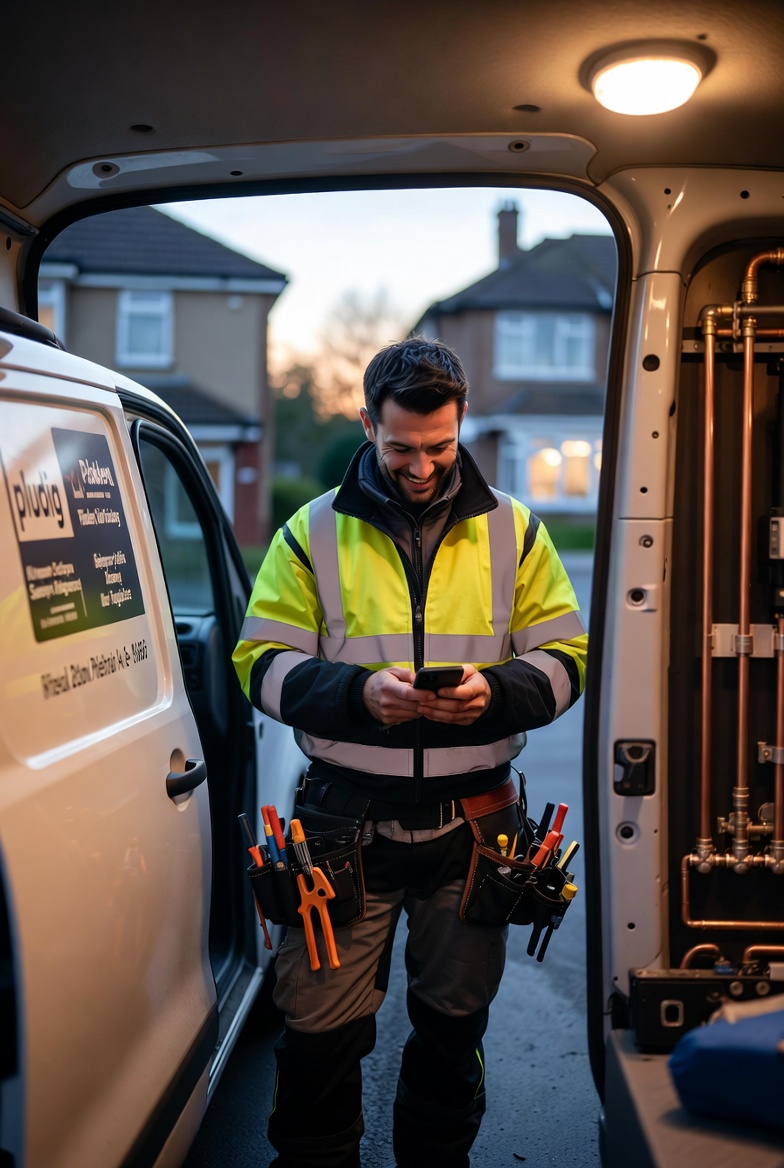
A small plumbing team was losing emergency boiler jobs while on site. Team-Connect AI answered every call instantly, triaged urgency, and booked callbacks — turning missed calls into revenue.

Reception staff overwhelmed with calls during peak hours meant patients heard voicemail. The AI receptionist now handles overflow, books hygiene and check-up slots, and sends SMS confirmations automatically.

Prospective clients calling during consultations went to voicemail and rarely called back. The AI now captures every enquiry, explains services, and books initial consultations — tripling conversion rates.

Buyers browsing portals at 9pm had nowhere to call. Team-Connect answers out of hours, captures property interest, takes viewing requests, and the agent wakes up to a full diary.

High-value renovation enquiries were going unanswered during site work. The AI captures project scope, property type, and budget — so the builder calls back with a qualified lead ready to convert.

Stylists can’t answer phones mid-appointment. The AI handles booking requests, explains services and pricing, and sends confirmation texts — every chair now stays booked solid.
Deeper reading on AI receptionists, missed calls, porting and the PSTN switch-off.

Missed calls cost UK SMEs billions each year. Why AI receptionists have become essential — and how to get started for less than a fiver a month.
How Team-Connect’s AI answers calls round the clock — handling enquiries, booking appointments, triaging emergencies and sending instant summaries.

How much revenue do you lose every time the phone rings and nobody answers? The real annual cost of missed calls for UK SMEs — and the cheapest way to fix it.

VoIP, SIP, hosted PBX, AI-powered — every option for UK businesses choosing a phone system in 2026, and how to pick the right one for your budget.

BT is switching off copper landlines by January 2027. Exactly what UK small businesses need to do to avoid disruption — and how to switch in minutes.

Keep your existing UK landline number but answer calls on your mobile. Step-by-step guide to porting safely, with no downtime.
Core terminology for AI reception and IVR.
Dual‑tone multi‑frequency tones from keypad presses.
Traditional menu system routing via fixed options.
Caller’s underlying goal (book, reschedule, emergency, quote).
First‑call resolution without transfers or repeats.
The most common questions answered clearly.
Sign up, forward your calls and see the impact within days. No contract, cancel any time. Keep your UK number, enable live transfer and connect calendars in minutes.
Written by Team‑Connect Editorial • Reviewed by UK CX lead • Last updated: 2026‑02‑15
We follow a fact‑check policy with weekly updates based on transcripts, metrics and user feedback.